 |
 |
 |
 |
 |
If you are aware of any social or cultural events around Dvaita philosophy, Click Here to add them on this website Hari Sarvotthama Vayu Jeevotthama |

| |
|
|
|
|
If you are aware of any social or cultural events around Dvaita philosophy, Click Here to add them on this website Hari Sarvotthama Vayu Jeevotthama |
| Aspect | Brahmā | Vāyu |
| Post | Creator role Life principle | Creator role Life principle |
| Jīva-rank | Lower | Higher |
| Knowledge of Hari | Less | More |
| Dependency | On Vāyu | Directly on Hari |
|
Hari (Viṣṇu / Nārāyaṇa)
↓
Vāyu (Mukhya Prāṇa – Hanumān–Bhīma–Madhva)
↓
Brahmā
↓
Śeṣa, Garuḍa, Śiva, Indra, other devas
↓
Humans
↓ Other beings
|
| Where they agree | The decisive difference |
|
Starting point: what both agree on
Both Dvaita and Viśiṣṭādvaita agree that:
• Hari / Nārāyaṇa alone is Supreme
• Vāyu is not God
• Vāyu is an exalted jīva
• Vāyu has immense power and knowledge
• Devotion (bhakti) is central
Agreement ends here.
|
Tarātamya (hierarchy among souls)
Dvaita (Madhva)
• Hierarchy among jīvas is eternal
• Souls are not equal, even in mokṣa • Vāyu is eternally the highest jīva
• His superiority is ontological, not honorary
Viśiṣṭādvaita (Rāmānuja)
• Souls differ in function and capacity
• But all liberated souls are equal in bliss
• Vāyu is exalted due to office and grace
• Not eternally superior in essence
This one doctrine changes everything.
|
|
3. Position of Vāyu in Dvaita
Ontological status
• Vāyu = second only to Hari
• Eternally superior to Brahmā, Śiva, others
• Never falls, never deluded
• Has maximum capacity for Hari-jñāna
Role
• Cosmic regulator of prāṇa
• Mediator of knowledge and devotion
• Chief teacher of tattva-jñāna
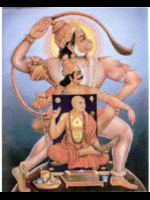
• Incarnates as Hanumān
→ Bhīma → Madhva
Key Dvaita idea
Even in mokṣa, Vāyu remains higher than other jīvas
Liberation does not flatten hierarchy.
|
4. Position of Vāyu in Viśiṣṭādvaita
Ontological status
• Vāyu = a very great jīva
• One among many eternal servants of Nārāyaṇa
• Not singled out as eternally second
• Superiority is functional, not absolute
Role
• Performs cosmic functions
• Serves Nārāyaṇa directly
• One of the Nitya-sūris / exalted servants
• No exclusive mediation role In mokṣa
• Vāyu enjoys the same bliss as other liberated souls
• Difference is only in service role, not status
|
|
5. Scriptural interpretation difference
Example: “Prāṇo hi bhūtānām āyuḥ”
(Prāṇa is the life of beings)
• Madhva:
→ Refers to Mukhya Prāṇa (Vāyu)
→ Indicates metaphysical superiority
|
• Rāmānuja:
→ Refers to prāṇa as divine function
→ Does not imply jīva-hierarchy
Same text, very different metaphysics.
|
|
6. Mediation: a critical dividing line
Dvaita
• Knowledge of Hari flows through Vāyu
• Vāyu is the chief guru-tattva
• Hence Madhva identifies himself as Vāyu
No true Viṣṇu-jñāna without Vāyu’s grace
|
Viśiṣṭādvaita
• Nārāyaṇa alone is guru
• Ācārya is respected, but not ontologically unique
• No single jīva has exclusive mediation power
|
|
7. Where Advaita rejects both
Advaita says:
• All hierarchy is vyāvahārika (provisional)
• Vāyu is a deva within māyā
• No eternal difference between souls
• No servant–Lord duality in mokṣa
So from Advaita’s view:
Dvaita goes “too far” with hierarchy
Viśiṣṭādvaita goes “too far” with devotion
Only non-duality remains
|
|