
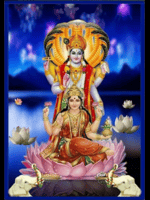
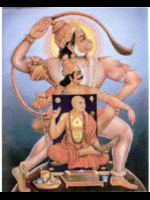
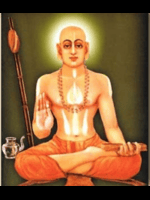
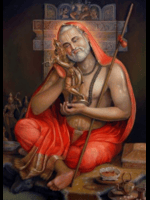

The position of Hari and Vayu in Dvaita, Advaita and Visistadvaita schools of Hinduism hierarchy:
At the heart of the divisions in the 3 schools of Vedānta is the position of Hari and Vayu in the Hinduism hierarchy. And this is where Dvaita stands apart. This article gives an explanation, school by school, clearly showing the hierarchy and status of Hari (Viṣṇu) and Vāyu (Mukhya Prāṇa / Hanumān–Bhīma–Madhva), without mixing doctrines.
First: who are Hari and Vāyu?
• Hari = Viṣṇu / Nārāyaṇa / Bhagavān → Supreme Reality
• Vāyu = Mukhya Prāṇa → Chief jīva, cosmic life-force, foremost devotee and servant of Hari
Now let’s see how each school positions them.
1. Dvaita Vedānta (Madhvācārya)
• Clear, fixed, eternal hierarchy
|
Hari (Viṣṇu)
• Supreme, independent reality (Svatantra tattva)
• Possesses infinite auspicious qualities
• Cause, sustainer, controller of everything
• Never subject to ignorance, karma, or bondage Hari alone is Parabrahman
|
Vāyu (Mukhya Prāṇa)
• Highest jīva (but still a jīva, not God)
• Eternally dependent on Hari (paratantra)
• Greatest knower of Hari among all souls
• Instrument of creation, sustenance, dissolution
• Incarnates as Hanumān → Bhīma → Madhva
|
Dvaita Hierarchy (simplified)
|
Hari (Viṣṇu) – Supreme, independent
↓
Vāyu (Mukhya Prāṇa) – highest jīva
↓
Brahmā
↓
Other Devas
↓
Humans
↓
Other beings
|
|
Key Dvaita doctrine:
Difference (bheda) between Hari and Vāyu is real, eternal, and never erased, even in mokṣa.
Devotion flow:
All worship → through Vāyu → reaches Hari (This is why Madhva tradition emphasizes Vāyu so strongly.)
|
2. Viśiṣṭādvaita Vedānta (Rāmānuja)
Qualified non-dualism with hierarchy inside unity
|
Hari (Nārāyaṇa)
• Supreme Brahman with attributes
• The inner controller (Antaryāmin) of all
• Souls and matter are His body
• Absolutely supreme, personal God
|
Vāyu
• A very exalted jīva
• One of the highest eternal servants of Nārāyaṇa
• Has great power and knowledge due to divine grace
• Still a mode (prakāra) of Brahman, not independent Relationship
• Hari is the whole
• Vāyu is a part of the whole
• Difference exists, but within inseparable unity
|
Nārāyaṇa (Brahman)
├─ Vāyu (highest servant-soul)
├─ Other devas
├─ Humans
└─ Matter
Key difference from Dvaita:
Hierarchy is real, but not absolute separation. All beings are organically united to Nārāyaṇa.
In mokṣa:
Vāyu remains eternally distinct but always in blissful service.
3. Advaita Vedānta (Śaṅkara)
No eternal hierarchy at the highest level
Ultimate Reality
• Nirguṇa Brahman (attribute-less, impersonal)
• No distinctions at the highest truth (pāramārthika)
|
Hari (Viṣṇu)
• Īśvara at the empirical level (vyāvahārika)
• Brahman associated with māyā
• Worshipped for liberation, but ultimately transcended
|
Vāyu
• A deva within māyā • A functional cosmic force • No eternal superiority over other jīvas
|
Advaita Levels of Truth
| Level | Status |
| Pāramārthika | No Hari, no Vāyu, no hierarchy |
| Vyāvahārika | Hari as Īśvara, Vāyu as deva |
| Prātibhāsika | Illusory distinctions |
Brahman (non-dual)
↓ (appearance through māyā) Īśvara (Hari), Vāyu, Devas, Jīvas
In mokṣa:
• No Hari–Vāyu distinction
• No servant–Lord relationship
• Only identity with Brahman
This is completely incompatible with Dvaita theology.
Side-by-side comparison
| Aspect | Dvaita | Viśiṣṭādvaita | Advaita |
| Hari | Supreme, personal God | Supreme personal Brahman | Empirical Īśvara |
| Vāyu | Highest jīva, eternal | Exalted jīva | Deva under māyā |
| Hierarchy | Eternal, absolute | Real but organic | Ultimately unreal |
| Difference | Eternal bheda | Difference-in-unity | Dissolved in mokṣa |
| Mokṣa | Eternal service | Eternal service | Identity with Brahman |
Summary:
• Dvaita: Hari is infinitely supreme; Vāyu is eternally the greatest servant
• Viśiṣṭādvaita: Hari is the whole; Vāyu is the highest part
• Advaita: Ultimately, there is neither Hari nor Vāyu — only Brahman
⸻ If you want next, I can:
• Contrast Madhva vs Rāmānuja on Vāyu specifically
• Explain why Advaita rejects tarātamya
• Show Hanumān–Bhīma–Madhva continuity verse-by-verse
• Give a Kannada-only explanation with quotations Just tell me
8. Clean comparison table
| Aspect | Dvaita (Madhva) | Viśiṣṭādvaita (Rāmānuja) |
| Vāyu’s rank | Eternally highest jīva | Exalted but not unique |
| Tarātamya | Eternal | Functional |
| Relation to Brahmā | Higher | Comparable |
| Mediation | Essential | Not essential |
| Mokṣa status | Hierarchy remains | Bliss equal |
| Hanumān–Bhīma–Madhva | Same Vāyu | No such doctrine |
9. One-sentence essence
• Dvaita: Vāyu is eternally second only to Hari
• Viśiṣṭādvaita: Vāyu is one among the greatest servants of Hari
• Advaita: Ultimately, there is neither servant nor Lord
Hari Sarvotthama Vayu Jeevotthama
The simplest description of Dvaita is the slogan “Hari Sarvotthama Vayu Jeevotthama”. There are equivalent slogans in Advaita and Visishtadvaita
Each Vedānta system really does condense into a slogan. Just like Dvaita is remembered by “Hari Sarvōttama, Vāyu Jīvōttama”, given below are the traditional equivalents for Advaita and Viśiṣṭādvaita, with brief explanations.
Advaita Vedānta (Śaṅkara) Core slogan “Brahma Satyam, Jagat Mithyā, Jīvo Brahmaiva Nāparaḥ”
Meaning • Brahman alone is real • The world is ultimately unreal (dependent/illusory) • The individual soul is not different from Brahman
Why this fits Advaita perfectly?
• No hierarchy • No eternal Hari–Vāyu–Jīva distinction • Mokṣa = realization of identity
One-line Advaita essence: There is only one reality, and you already are that.
Viśiṣṭādvaita Vedānta (Rāmānuja) Core slogan (most accepted) “Śrīman Nārāyaṇaḥ Eva Parabrahma”
Meaning • Śrīman Nārāyaṇa alone is the Supreme Brahman This is the identity marker of Viśiṣṭādvaita.
Expanded Viśiṣṭādvaita slogan (often taught) “Śrīman Nārāyaṇaḥ Eva Parabrahma Jīva–Jagat Tasya Śarīram”
Meaning • Nārāyaṇa is the Supreme • Souls and the world are His body • Difference exists, but within inseparable unity
One-line Viśiṣṭādvaita essence: God is one, with souls and matter as His modes.
Dvaita Vedānta (for completeness) Core slogan “Hariḥ Sarvōttamaḥ, Vāyuḥ Jīvōttamaḥ”
Meaning • Hari is the Supreme God • Vāyu is the highest soul • Eternal hierarchy is real
Side-by-side snapshot
| School | Core slogan | Core idea |
| Advaita | Brahma satyam… | Absolute non-duality |
| Viśiṣṭādvaita | Śrīman Nārāyaṇaḥ eva parabrahma | Qualified non-duality |
| Dvaita | Hari sarvōttama, Vāyu jīvōttama | Eternal dualism |
One-line comparative intuition
• Advaita: Only Brahman exists
• Viśiṣṭādvaita: Only Nārāyaṇa exists — with attributes
• Dvaita: Hari exists supremely — others eternally depend ⸻